
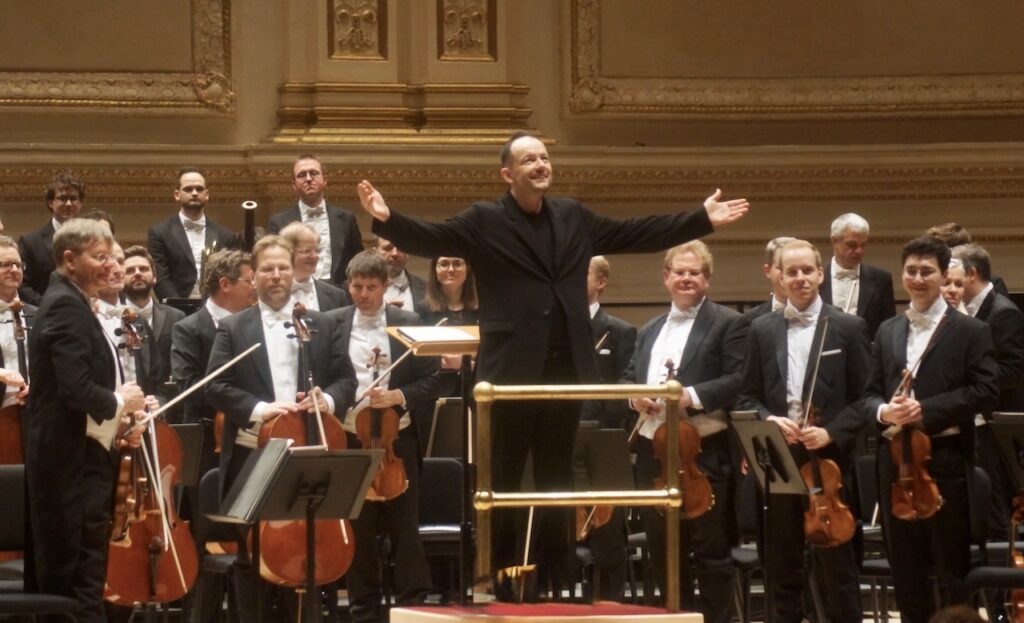
I, like most people who follow classical music, was floored by the news last Friday that Andris Nelsons, music director of the Boston Symphony since 2014, was being dismissed at the end of his current contract, following the 2027 Tanglewood season. This was an abrupt shift, given that the BSO had offered Nelsons a “rolling evergreen contract” only two years ago, which was meant to indicate a long-term commitment.
It was especially shocking given that I just saw Andris lead the Vienna Philharmonic in three concerts at Carnegie Hall. From my perspective, those concerts were hardly the work of a second-rate conductor: to me, he sounded “completely at home in front of this vaunted ensemble, conducting with gravitas and old world nobility.” Closer to home, Nelsons won two Grammys just last month for his recordings with the BSO.
So, it’s safe to say this wasn’t performance-related. Could it have had something to do with bringing the Vienna Phil to Symphony Hall following their weekend at Carnegie? Perhaps that was a bit too in-your-face for the stakeholders in Boston, many of whom were already irked by Andris’ divided loyalties between them and Leipzig, where he’s been Kapellmeister of the Gewandhaus Orchestra since 2017.
In a letter to the musicians, the board of trustees simply said, “the BSO and Andris Nelsons were not aligned on future vision.” There’s been a lot of speculation as to what exactly that means, but presumably there was a disagreement over whether Nelsons could realize CEO Chad Smith’s progressive vision for the BSO.
“The upcoming search will be an opportunity for the BSO to really reimagine the kind of music director that we want,” Smith told The Boston Globe on Friday.
It also may have had something to do with money, according to the NY Times Adam Nagourney.
“Smith said the board decided to fire (Nelsons) once they were unable to come to agreement on what Smith described as serious challenges facing the orchestra, including…mounting deficits and a need to deal with $90 million worth of deferred maintenance at Symphony Hall and the Tanglewood campus in the Berkshires.”
Huh? For those who aren’t aware, the Boston Symphony has by far the largest endowment of any orchestra in the world, currently close to $700 million. (By comparison, the NY Phil’s endowment is roughly $225 million.) Which means that, while they can’t spend money like there’s no tomorrow, they have a significant cushion so that they don’t have to worry about dipping into the endowment to cover their costs, unlike some other performing arts organizations. So, something about Chad’s money worries doesn’t quite add up.
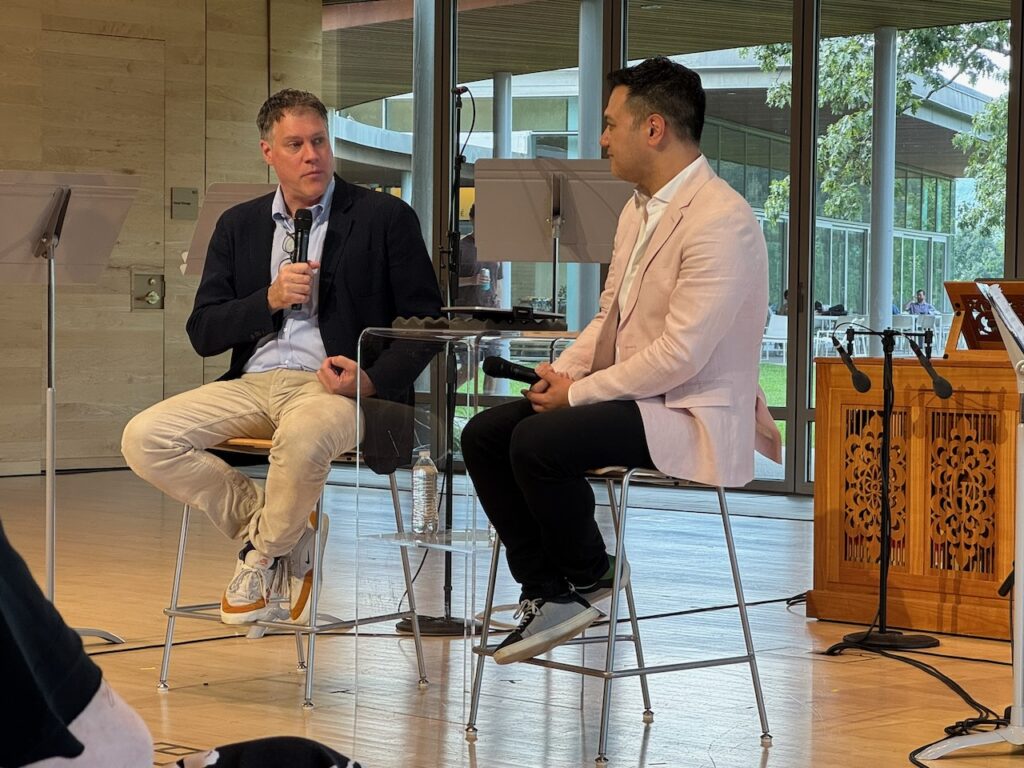
Smith went on to say, “We are, like many arts organizations, facing an inflection point where what has worked in the past is not working going forward. The decision that the board made to not renew was about focusing on looking ahead.”
Translation: they want a music director who isn’t old school, and is willing to do more things outside of the concert hall.
Look, change happens. And, 13 years is a solid run for any music director by modern standards. Problem is, no one bothered to loop in the BSO musicians, who over the past week have come out strongly in favor of Nelsons. In a statement released the day following the board’s announcement, they wrote:
“We strongly oppose the decision by the Board of Trustees to end the appointment of Maestro Nelsons…The musicians believe in Andris’s vision for the future.”
“We were blindsided,” Todd Seeber, a double bass player and chairman of the orchestra’s Players’ Committee, bluntly told Nagourney.
“The decision not to renew Andris’ tenure is a form of artistic suicide,” principal flutist Lorna McGhee wrote to the board. “It represents the greatest squandering of artistic capital I have ever witnessed.”
Perhaps even more disturbing is that, according to unnamed orchestra officials, this has all been in the works since last September, as Smith and the board tried to negotiate a “quiet exit” for Nelsons.
“We know that there’s a lot of anger and pain in this moment,” Smith said. “But this decision is a part of a deliberate process and comes back to this idea of how is our organization, how is our orchestra, going to thrive and be viable for the next 145 years.”
It all sounds a bit Game of Thrones-y, pitting Nelsons and the musicians against Smith, who has the crucial backing of BSO Board Chair Barbara Hostetter, who took over in 2021.
“The goal of the new management and the new board, since Barbara Hostetter took over, has been to change the entire Boston symphony,” former BSO violinist Jennie Shames told the Globe. Case in point: Hostetter was instrumental in forcing out former BSO CEO Mark Volpe, seeing him as “not progressive enough,” according to one former BSO executive who spoke to the Globe.
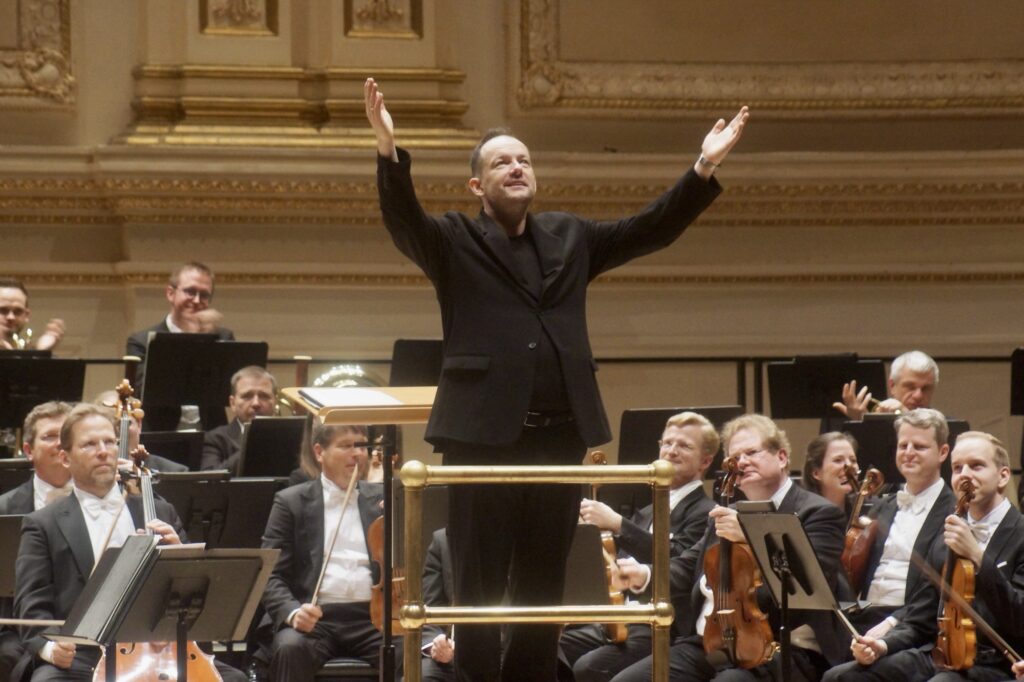
I’ve made no secret about the fact that I think Andris is guilty of Maestro hubris, taking on more work than he probably should. But at the same time, he’s one helluva conductor – which I’ve witnessed myself on multiple occasions, both here and in the Berkshires – and all indications are that he had formed a close bond with the BSO musicians. Unfortunately, Smith and Hostetter had other plans, and have apparently worked overtime to undermine Nelsons and allies, such as longtime artistic administrator Tony Fogg, who recently announced his “retirement” following this summer’s Tanglewood season. (The BSO’s communications department did not respond to my request for more information regarding Nelsons’ dismissal.)
As a result of all this intrigue, there’s going to be a lot of fence-mending to do: with the musicians, with audiences, and with the orchestra world at large, which now will likely see the BSO as an unfriendly place to work.
“Had I known the Board and management would take its current course of action,” McGhee’s letter concludes, “I likely would not have come to Boston and now find myself questioning, for the first time, how long to stay.”
All will be forgiven if Smith and Hostetter’s goal of refreshing the admittedly-hidebound BSO comes to fruition, resulting in fuller houses and younger, more diverse audiences – provided it doesn’t come at the expense of artistic quality or integrity. Only problem is: Boston is not L.A., where Chad spent 22 years developing all kinds of innovative programming and education initiatives, with resources to match. And, unless the BSO has an ace up their sleeve, it seems highly unlikely they’ll be able to find their next music director by the time Nelsons leaves. Someone worthy of the BSO, that is. (Sorry Chad, Gustavo’s taken.)
Awkwardly, Andris is headed back to Boston next week for three weeks of concerts, followed by two performances here at Carnegie Hall (April 9-10). I can only imagine the raucous reception that awaits him, which will hardly be music to the BSO board’s ears. Stay tuned.

This is highly unfortunate since the BSO will now become a second rate orchestra. Nelson’s repertoire included many modern pieces and new pieces by contemporary composers. We’re simply looking at arrogant administrators trying to make a name for themselves instead of fixing the current issues of attendance with a smart marketing and outreach campaign. I will certainly not attend BSO concerts if they cannot match Nelson’s top tier quality with their new appointment, something I seriously doubt since all the great conductors are taken. Even Salonen is not in the league of Nelsons.
Thanks very much for your comment, apologies for the long delay in responding! I agree that Nelsons is a fantastic conductor, but I think it’s fairly myopic to say “all of the great conductors are taken.” Nelsons himself was only 34 when he was hired, and hadn’t yet done much outside of the CBSO. My sense of the situation is that the arrogance is more on Nelsons’ part, thinking he could just play “my way or the highway.” His post-dismissal behavior has been even worse. Let’s just get through the next year and see what happens.
I have recently started a website, the info you offer on this site has helped me tremendously. Thanks for all of your time & work.