
BELFAST, Northern Ireland
For as long as I can remember, I’ve loved Irish music, with it’s lilting melodies and dancey rhythms played on traditional instruments such as uilleann pipes, button accordions and bodhráns. And, the more time I spend in Ireland, the more I see just how essential music is to Irish culture, at least as much as its poetry and pubs. (For locals without an AerClub account: NYC has plenty of regular Irish sessions that are on the level.)
Beyond traditional music, Ireland’s musical bent has yielded wild success in the pop/rock sphere, starting in the 60’s with Van Morrison, moving through the 70’s with rockers Rory Gallagher and Phil Lynott’s Thin Lizzy. Then came the 80’s with U2, Sinéad O’Connor, and The Pogues (ok, they’re technically British), while the 90’s ushered in The Cranberries, My Bloody Valentine, and The Frames, fronted by the late Glen Hansard. Today, Irish bands continue to punch well above their weight, with Hozier, Fontaines D.C., and Two Door Cinema Club selling out arenas around the world.
But, what about classical music? Could the airs and reels most often heard around a pub table somehow translate to the rich soundworld of a symphony orchestra? Are there classically-trained violinists and flutists to match the fiddlers and tin whistlers that played this summer at the Fleadh Cheoil? That was what the Ulster Orchestra sought to explore during my most recent visit to Ireland two weeks ago, with a program devoted to music inspired by Ireland, Scotland, Wales and beyond.
Celebrating their 60th anniversary this year, the Ulster Orchestra is Northern Ireland’s only full-time professional orchestra. Based in Belfast, a city with a population around 350,000, the orchestra plays to a high standard throughout Northern Ireland and Europe, including regular invitations to the BBC Proms where they are scheduled to return next summer. Occasionally, they’ll pop up in unexpected places: in September, they supported Icelandic post-rock heroes Sigur Rós in the final dates of their world tour in Belfast and Dublin.
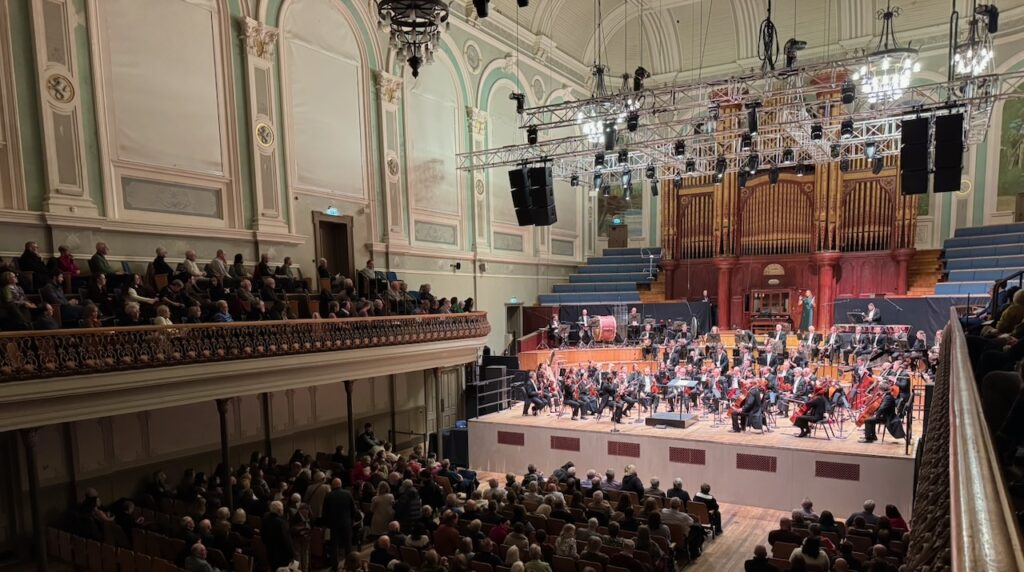
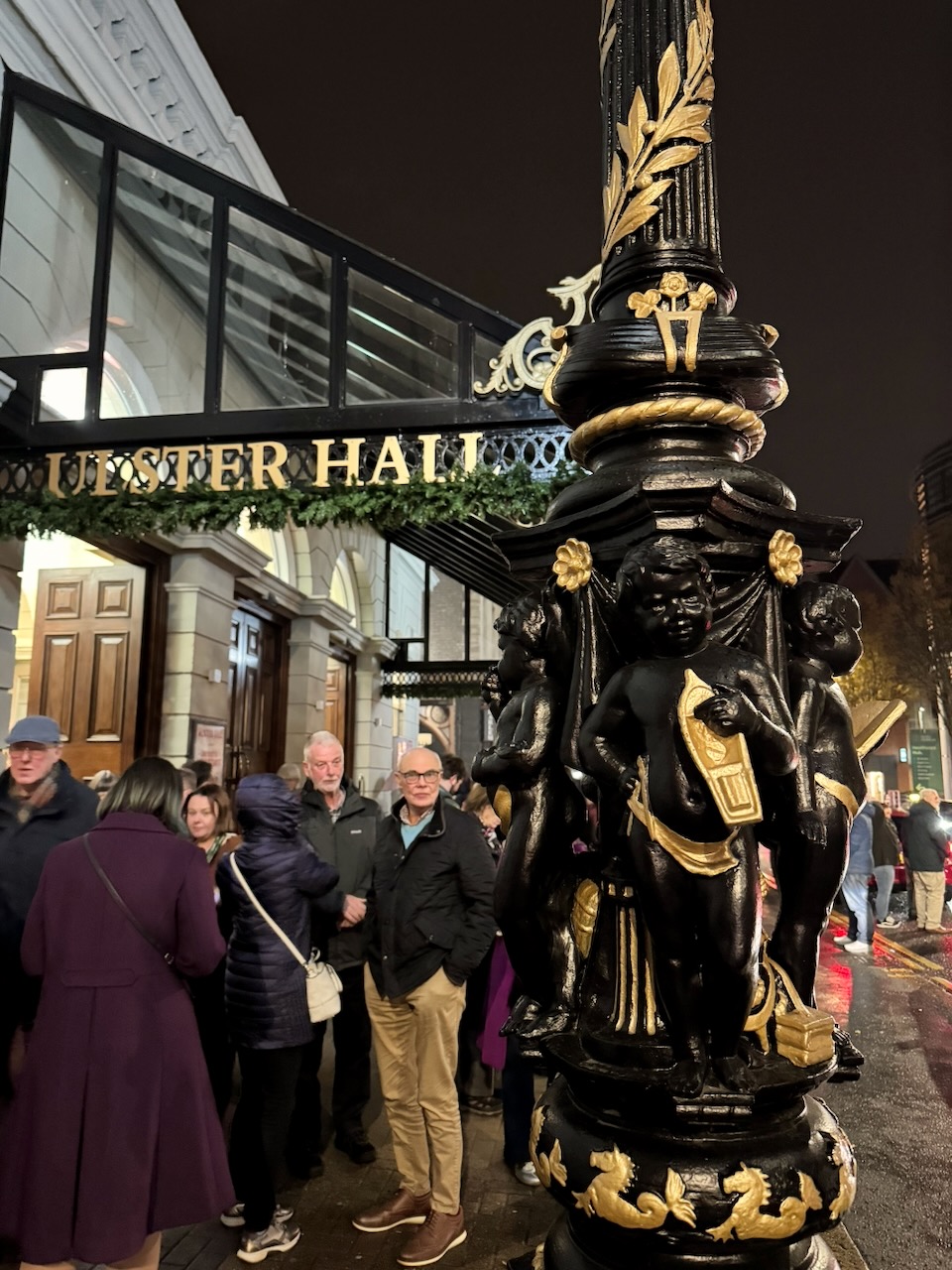
Most Belfast concerts take place in Ulster Hall: an intimate 19th century shoebox that’s built on near-identical dimensions as Vienna’s legendary Musikverein, with the same brilliant acoustics. (Belfast’s larger, more modern Waterfront Hall is generally reserved for popular concerts.) Sadly, that’s where the comparisons end: Ulster Hall, which has hosted everything from boxing matches to a riotous Rolling Stone show, is showing its age, with faded, peeling paint and threadbare carpeting throughout, despite an £8.5 million renovation in 2009 which addressed urgent structural issues. The best seats are in the wraparound balcony; orchestra seating is on removable chairs, leaving the stage looking awkwardly high.
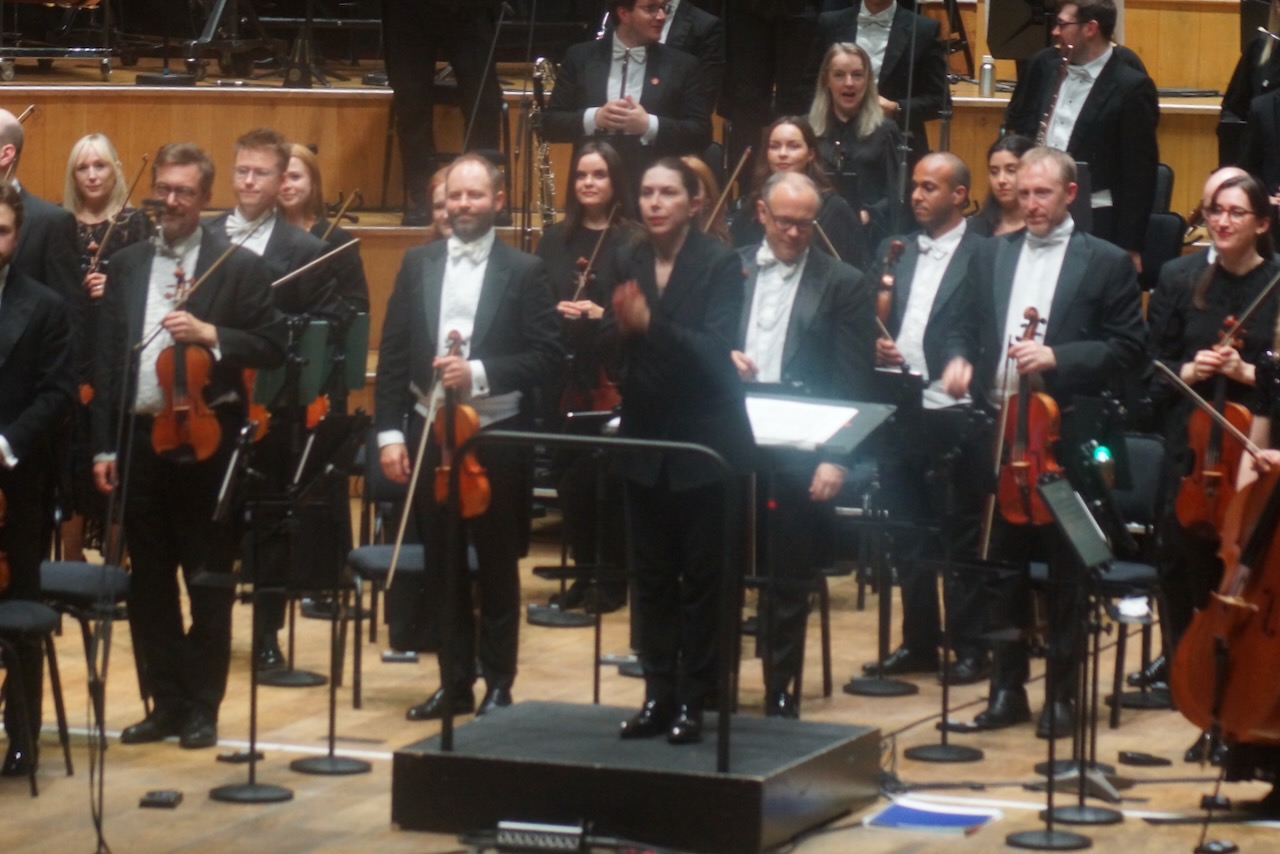
Over its recent history, the Ulster Orchestra has attracted several early-career conductors who have since gone on to major posts, including Montreal and San Diego Symphony music director Rafael Payare and Met Opera principal guest conductor Daniele Rustioni. This season, German-Colombian conductor Anna Handler began her tenure as Chief Conductor, kicking off in September with an epic performance of Beethoven’s 9th. I got to know Handler, 30, over the past two summers at Tanglewood where I saw her lead several energetic, incisive concerts as the Boston Symphony’s Assistant Conductor. (Handler is also the LA Phil’s new Conductor-in-Residence and Kapellmeisterin of the Deutsche Oper Berlin.)
Handler was back in Belfast on November 6 to conduct “Celtic Symphonies“, a program of Celtic-flavored works that would seem to be squarely in this Irish orchestra’s wheelhouse. (I can hear Beethoven or Brahms anywhere.) The concert was broadcast live across the UK as part of the BBC’s long-running “Friday Night is Music Night” program, hosted by veteran Radio 3 and BBC Proms host Katie Derham, who offered piquant notes on each of the pieces. It felt a bit like the old Prairie Home Companion broadcasts I used to attend here at Town Hall, albeit with a bit less audience enthusiasm. (Coming out of intermission, Derham coached us to be a bit more animated, which Handler assiduously encouraged from the podium.)
Part of the problem when talking about “Irish” composers is that until recently, any Irish musician worth their salt would end up in England, thanks to the dearth of opportunities on the Emerald Isle. Hillsborough-native Hamilton Harty, who became chief conductor of Manchester’s Hallé Orchestra and the London Symphony Orchestra, put it bluntly: “Ireland offers (composers) no scope. He reaches a certain point and then drifts.” Things have improved a bit, with a burgeoning contemporary music scene in Dublin that includes Donnacha Dennehy’s Crash Ensemble and Martin Hayes’ Common Ground Ensemble, along with recent operas by Tarik O’Regan, Emma O’Halloran and Jennifer Walshe. But, one would be hard pressed to find anything identifiably “Irish” in this music, given that most of these composers have studied and/or live in the US or the UK.
So, we’re left with lighter, somewhat dated works that employ the sounds of Celtic music, but without the emotional urgency or transcendent splendor you’d get from contemporaneous composers such as Strauss or Mahler. Case in point: Harty’s “The Fair-Day” from his Irish Symphony (1901, rev. 1924), a colorful, rollicking jaunt depicting scenes from a typical Irish country fair. That was followed by a light, dancey Polka from Harty’s John Field Suite, arrangements of music by the 18th century Irish composer best known as the inventor of the piano nocturne.
Dublin-born Charles Villiers Stanford may be best known for his Anglican choral music and for his long tenure as professor of music at Cambridge and the Royal College of Music. But, he also wrote music inspired by his homeland, including six Irish Rhapsodies written as a sort-of homage to Liszt’s Hungarian Rhapsodies. The formal Rhapsody No. 1 (1902), which he dedicated to the conductor Hans Richter, was inspired by tales from the Ulster Cycle, with the familiar tune “Farewell to Cuchullin” played by the cellos, better known to modern ears as “Londonderry Air” (aka “Danny Boy.”)
Opportunities for women composers were all-but-nonexistent in the mid-20th century, which prompted Irish composer Joan Trimble to follow her male compatriots to London. The lush, tender “Air” from her Suite for Strings (1953) was inspired by the folk songs she heard growing up in Enniskillen. Across the Irish sea in Wales, Grace Williams incorporated tunes from her own youth such as “Jim Cro” and “Deryn y Bwn” into her upbeat, trumpet-driven Fantasia on Welsh Nursery Tunes (1940).
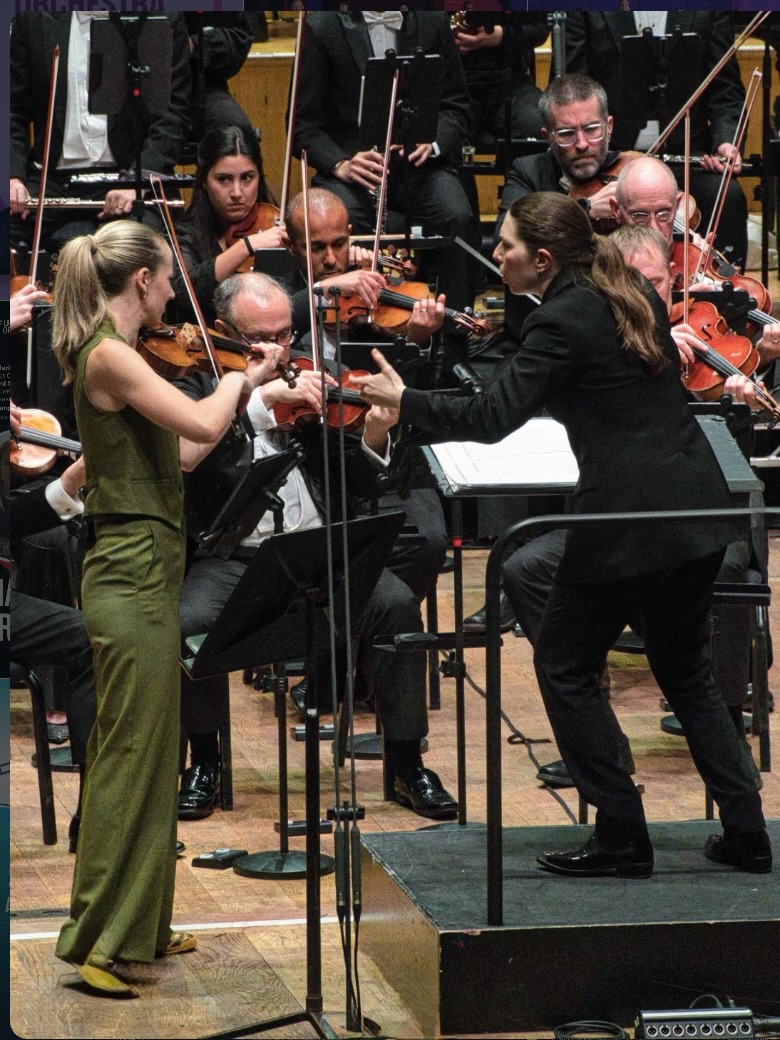
The Celtic connections on the rest of the concert were a bit more tenuous, with music written mostly by outsiders. Probably the most recognizable work on the program was the Finale from Max Bruch’s Scottish Fantasy (1890) for violin and orchestra. Bruch never set foot Scotland, but this performance was at least given some Celtic flavor by the Dublin-based Aoife Ní Bhrain, an exceptional violinist who’s developed a dual-career as both concert soloist and champion fiddler. Aoife played the challenging finale with understated poise, dispatching it’s difficult herky-jerky rhythms with ease.
English composer Malcolm Arnold is probably best known for his film scores, including the Oscar-winning Bridge over the River Kwai, but he also wrote a fair number of evocative concert works. Among those were the Four Scottish Dances (1957), ranging from a quiet Allegretto to a wild Con Brio. (Arnold also wrote sets of Irish, Welsh, English and Cornish dances.) And, while Arnold’s blaring “Padstow Lifeboat March” (1968) didn’t sound very Celtic, it was at least lively, with French horns standing in for the foghorns of the Trevose lighthouse in Cornwall.
On the surface, it felt even more of a stretch to include Camille Saint-Saens’ rarely-heard Rapsodie Bretonne (1891) on a concert devoted to Celtic-inspired music. But, Saint-Saens’ soft, subtle melodies did manage to evoke the haunting refrains of Breton folk music, with its bombardes, biniou and wooden flutes. Celtic or not, this was some of the loveliest music I heard on the evening. (For New Yorkers, Saint-Saëns’ opera Samson et Dalila opens at the Met next week.)
Arnold Bax, who once spent time in Dublin literary circles under the pseudonym Dermot O’Byrne, had an abiding love for Celtic culture, so it’s perhaps not surprising that he was driven to write his majestic tone poem Tintagel (1919) during a torrid affair in Cornwall with a girl 12 years his junior. Inspired by the ruined castle of the same name, the turbulent, romantic music flirts with allusions to both Arthurian legend and Wagner’s Tristan und Isolde, without ever explicitly quoting from it. To me, it sounded more British than Celtic, but with its big, brassy conclusion, Tintagel was the highlight of the night and the perfect way to head out into the rainy Belfast evening.
While I enjoyed this concert on a certain level, I’d be lying if I said I felt transported. For that, Belfast concertgoers have plenty to look forward to in the new year, starting in January when Handler leads the orchestra in Brahms 4 and Mozart’s 4th Horn Concerto (with Berlin Phil principal Stefan Dohr.) Then, on May 7, Handler pairs the Brahms Violin Concerto with Bruckner’s 6th, followed two weeks later by a blockbuster season finale at Waterfront Hall (May 21) that features Steve Reich’s Pulses and Clapping Music, Scriabin’s The Poem of Ecstasy, and Stravinsky’s Rite of Spring. Guess I’d better book my plane tickets now.
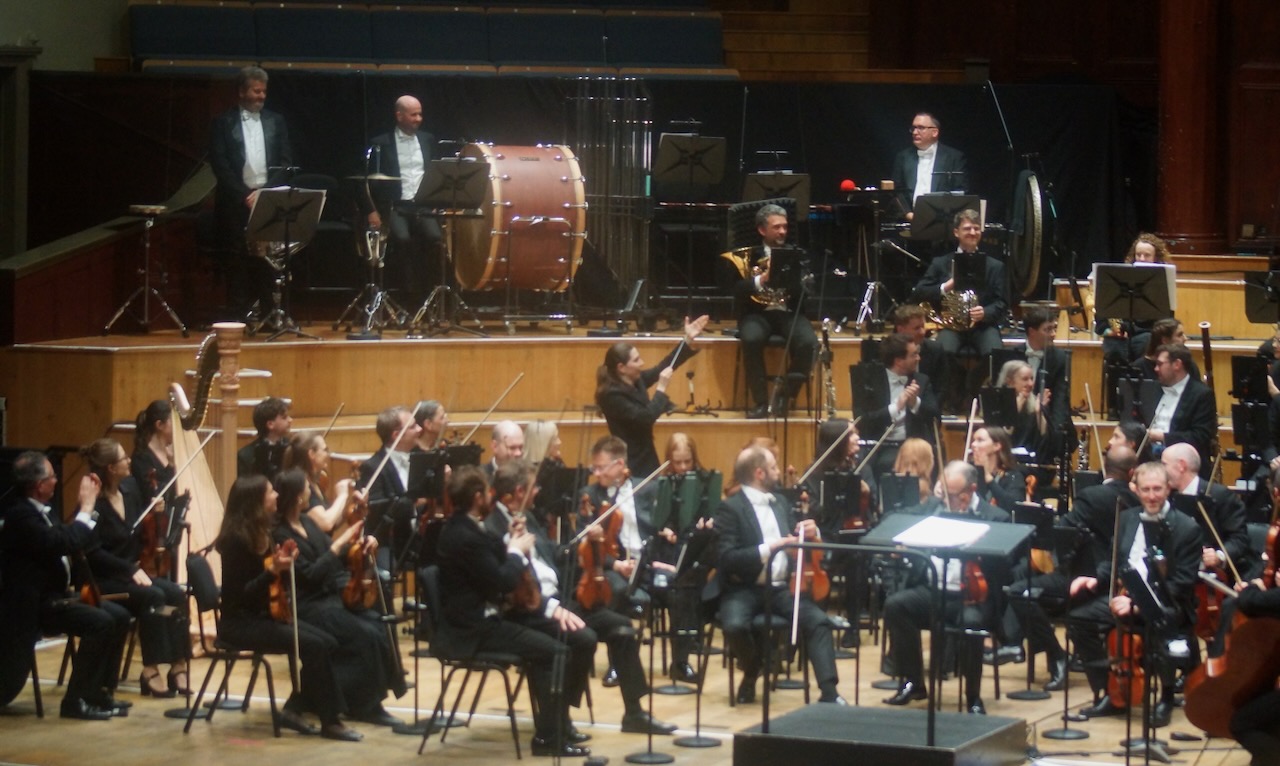
P.S. Following the concert, I had the chance to catch up with Handler on her time so far at the Ulster Orchestra, as well as her thoughts on building a dual career as both conductor and pianist. Stay tuned for that.
More pics on Instagram.